Human-Shaped Problems

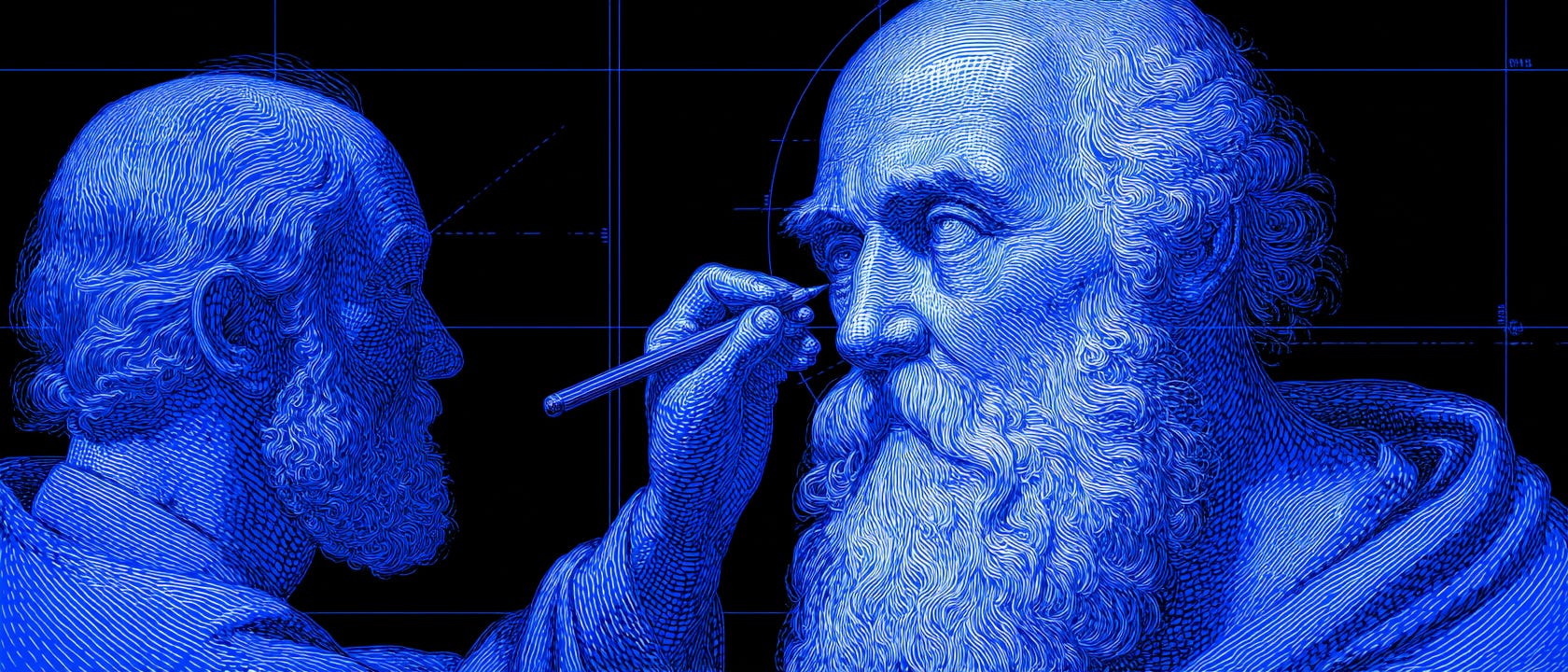
What is the phenomenology of using a quality interface? Without a body, can an LLM designer truly experiment with what feels good? Sure, with RLHF we have designed very good ways to distill human preference for current interfaces into models, and we have every reason to expect this to continue -- but what about when we design new interfaces?
Some of my friends are very worried that the future will look like a whole lot of nothing. I think it looks like humans solving human-shaped problems and machines solving machine-shaped problems. Some problems are going to be both human-shaped and machine-shaped, and those problems will likely get solved mostly by machines. I don’t think we should worry about this, too much, unless you believe that the spreadsheet-mines are the final culmination of the human-evolutionary purpose.
Eventually, the machines will probably be able to emulate humans well enough to help us solve human-shaped problems (questions of meaning and the soul and why instagram feels evil to use) but by that point, I think they will have to basically become human and will be operating as we do -- same clock speed, same turf. Humans are systems-creatures, made of the environment as much as our own bodies. To be able to simulate one of us accurately, they also need to simulate everything around us. In the limit, this just looks like pouring an LLM-soul into a human-shaped body with human-shaped limitations. No need to split the difference when it comes to substrate.
At every point, when human and machine become closer, we will require humans in the loop in order to make sure that it feels good. This is probably one of the primary things we are meant to be doing! We build a tool that makes it easier to do things in the world, and then we refine that tool to suit our needs as we refine ourselves to suit the world with the tool. The latter is much easier than the former, and history encourages us to believe that we will continue shaping our tools more than our tools shape us. I don’t think this will always be the case, but if you replace tool with interface (which feels more accurate when talking about LLMs, anyway, since they are minds-unto-themselves), it becomes a bit easier to understand.
So, what will it look like? I expect that phenomenology and interface design will quickly unite into some sort of taste-making exocortical embodied-computing type field, where genius cyborgs on the cutting edge experiment with new ways of interfacing that don’t send our nervous systems into meltdown. This will be one of the more incredible fields to participate in, as you will necessarily need to be a scout ahead of the cutting edge, ready to deploy your interfaces to the hordes of agent-summoners demanding tighter loops with their spirit-swarms. It will look like Frontier Epistemology, creating new systems of meaning and dynamic-interfacing that engage with one another in a dance-like interplay of mechanism and feeling. It might even look like living a fulfilling life that integrates our new creations in a way that is holistically fulfilling. It could even look a lot like your life right now, just more enchanted.
If you have your nose to the ground, you know there are pockets of this world popping into existence already. Frontier interface-phenomenologists are building massive agent scaffolds that are dopaminergically intoxicating and demanding of their entire attentional-field. Hardware-designers are pushing the limits of miniaturization in an attempt to embed more and more exo into their skeletons. LLM whisperers are entering feedback loops of unforeseen closeness using audio models, practically merging with the machine under agonizing bandwidth limitations.
But, this isn’t yet widespread: most people aren’t even aware that there are new shapes of interface that need to be built in order to commune with the minds of the future. This presents with it a tremendous opportunity to begin studying what types of interfaces feel good now and how we can make them even more fluid, elegant, and attentionally-satisfying into the far future when everything starts looking alien. By getting out there (or in there?) and experimenting with completely novel ways of interfacing, you have the chance to set the precedent for entirely new modes of being as we move into uncharted waters. We get to be the first monkey to pick up a stone and smash a bug. Which stone are you going to choose? And, perhaps more importantly, which bug are you going to smash?
In terms of design I think we will see skeuomorphism make a comeback
I've thought along these lines as well, teaching is a big case that comes to mind. Maybe what you mean by interface design includes that. I think the study of how people actually interact with intelligent systems is going to be very big. Maybe the tech world will have some use for philosophers and people with taste generally, you can already see it with Anthropic. And I think it's a very good point that curatorial work in this vein is much more appropriate to the divine human nature.